What's On > News
What if We Stopped Pretending?
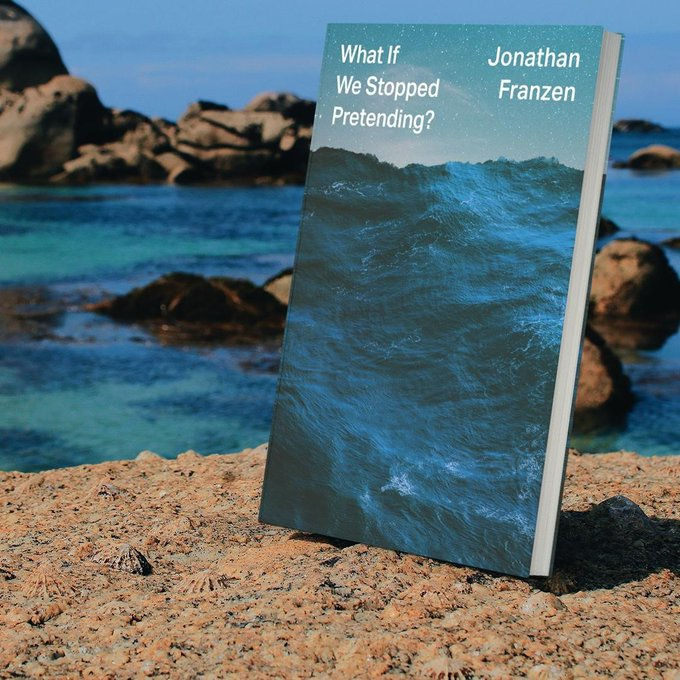 That’s the thesis of Jonathan Franzen’s controversial book "What If We Stopped Pretending"?
After putting it off for years I finally read it. And... Ooof!
Today, the scientific evidence verges on irrefutable. If you’re younger than sixty, you have a good chance of witnessing the radical destabilization of life on earth massive crop failures, apocalyptic fires, imploding economies, epic flooding, hundreds of millions of refugees fleeing regions made uninhabitable by extreme heat or permanent drought. If you’re under thirty, you’re all but guaranteed to witness it.
‘If you care about the planet, and about the people and animals who live on it, there are two ways to think about this. You can keep on hoping that catastrophe is preventable and feel ever more frustrated or enraged by the world’s inaction. Or you can accept that disaster is coming, and begin to rethink what it means to have hope.’
Franzen argues that climate action has failed because we’re still stuck in a softer kind of denial than climate denial - the kind that says we can still avoid catastrophe, if we just try hard enough.
He points to the facts that
The two-degree target? Almost certainly out of reach.
We’ve emitted more CO₂ in the past 30 years than in the 200 before.
Global infrastructure alone locks in overshoot.
Collective action, at the scale needed, has never gotten close to materialising.
Certainly my personal favourite stats on climate change back that up. I've been tracking PwC’s annual global decarbonisation report since 2012 and last years figures show that we achieved just a 1.04% global decarbonisation rate — the lowest in a decade and some way off the required rate of 6.9% (I think it was 3% when I first started tracking this - but don't quote me on that).
But... whilst these facts may hold true...
There are great signs of progress, as this great video shows
Carbon emissions from electricity may have already peaked
⚡ Renewables are now the cheapest option in many countries
Chile is building battery storage the size of its national peak demand
China and Norway are racing ahead on electric vehicles
️ Even steel and cement are starting to decarbonise
Forest cover is increasing in temperate zones
The Middle East is now one of the fastest-growing solar regions
Indeed, Franzen himself doesn’t say give up, but instead he calls for us to just get real work on the issue by asking us to stop chasing salvation, and start protecting what we love.
That might mean wilding your garden,
Or supporting your local community,
Or supporting your businesses supply chain to decarbonise.
Whatever is important to you. Do something.
Because that's were we find hope - in the things we love.
Hope isn't about winning.It's about fighting tooth and nail to save the things you love whatever the odds.
And I do agree with Franzen that this is something we could probably do with more of.Because every tenth of a degree still matters.
And because resilience and kindness will matter more than ever should the worst of climate change hit. And because the single greatest cure for climate anxiety will always be climate action.